
Why Do Conkers Shine? The Science of Horse Chestnuts
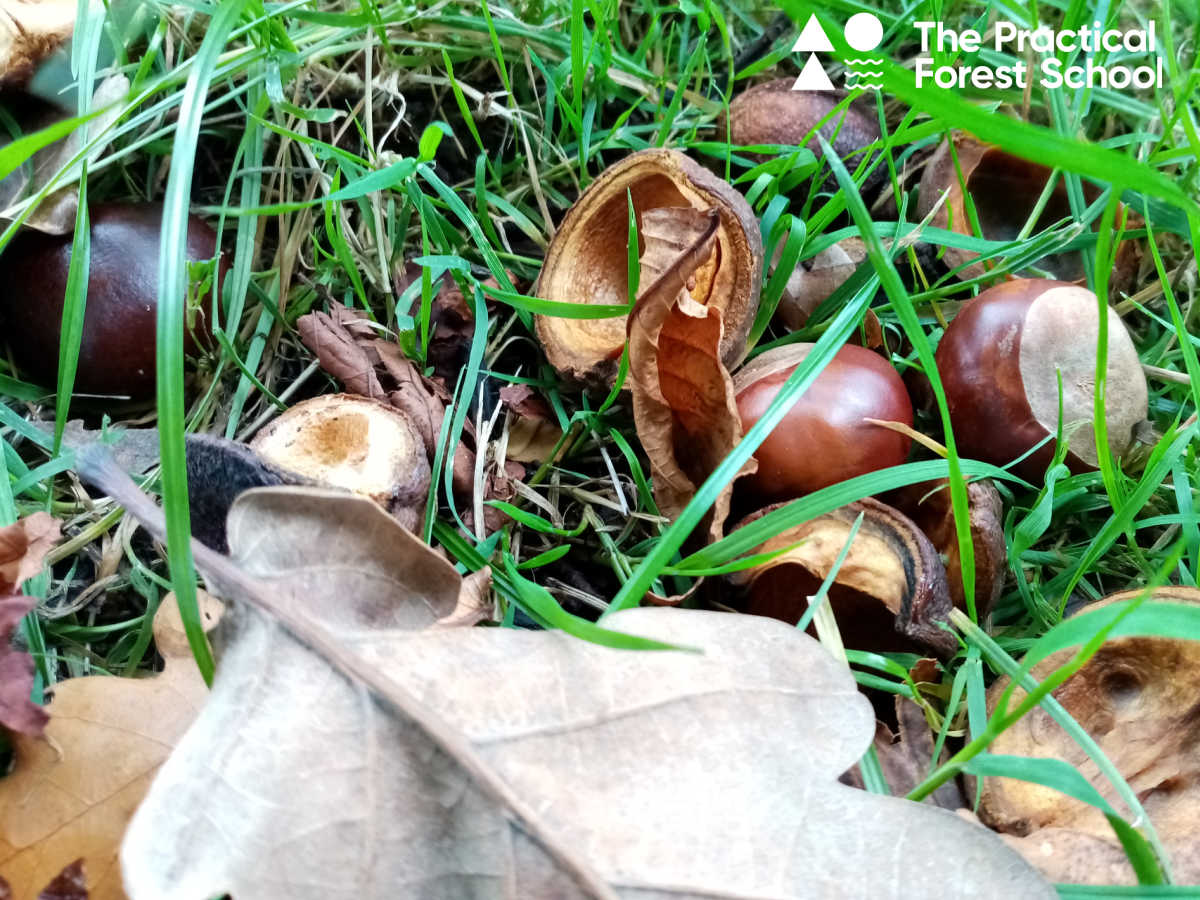
Every child who’s ever cracked open a spiky green case knows the moment: the conker inside is glossy, almost wet-looking, a deep reddish-brown that seems too polished to be natural. Within a few days, sitting on a windowsill, that same conker looks flat and dull. Nothing was done to it. It just sat there.
That fading is the whole answer, more or less, and it’s a better science lesson than it first appears.
What’s actually happening
A conker’s shine when freshly opened comes largely from moisture — the seed has been developing inside a sealed, cushioned case, and the surface is still slightly damp when it’s split open. As that moisture evaporates over the following three or four days, the shine goes with it, according to horse chestnut research summarised by Owlcation.
There’s a wax layer involved too. Like most seeds and fruit, a conker’s outer coat (technically the testa) carries a natural cuticle of wax, which is common across the plant kingdom as a way of controlling water loss and deterring pests. It’s the combination of that wax layer and surface moisture that gives a fresh conker its particular gleam, rather than either alone.
More horse chestnut activities
The trick that brings it back
Buff a dulled conker with a soft cloth — old nylon tights are the traditional choice among serious conker collectors — and the shine returns, at least partially. The buffing works the conker’s own natural oils back to the surface, which is a neater party trick than most people expect from what’s essentially just rubbing a seed (the Peckham Conker Club has a good short write-up on this).
This is also why competitive conker players — and there are more of them than the casual playground game suggests — have strong, often contradictory opinions about ageing conkers before a match, since a year-old, dried-out conker behaves very differently under impact than a fresh one.
The chemistry that makes them inedible
Horse chestnuts contain saponins, a group of soap-like compounds also responsible for their bitter taste and mild toxicity — which is the reason conkers are firmly a look-don’t-eat item, unlike the unrelated sweet chestnut. Saponins produce a foamy lather when crushed in water, and horse chestnuts were historically used exactly that way, as a rough soap substitute, and fed in small quantities to livestock as a coat conditioner.
A few facts worth having ready if a child asks “but can I eat it”:
- Horse chestnuts and sweet chestnuts are unrelated trees, despite the similar name and appearance of the outer case.
- Conkers are mildly toxic to humans raw, and not a foraging item (this is one to be clear about before any autumn nature walk!)
- The saponin content is also why deer and most wildlife leave conkers alone, unlike acorns or beech mast.
A quick experiment worth trying
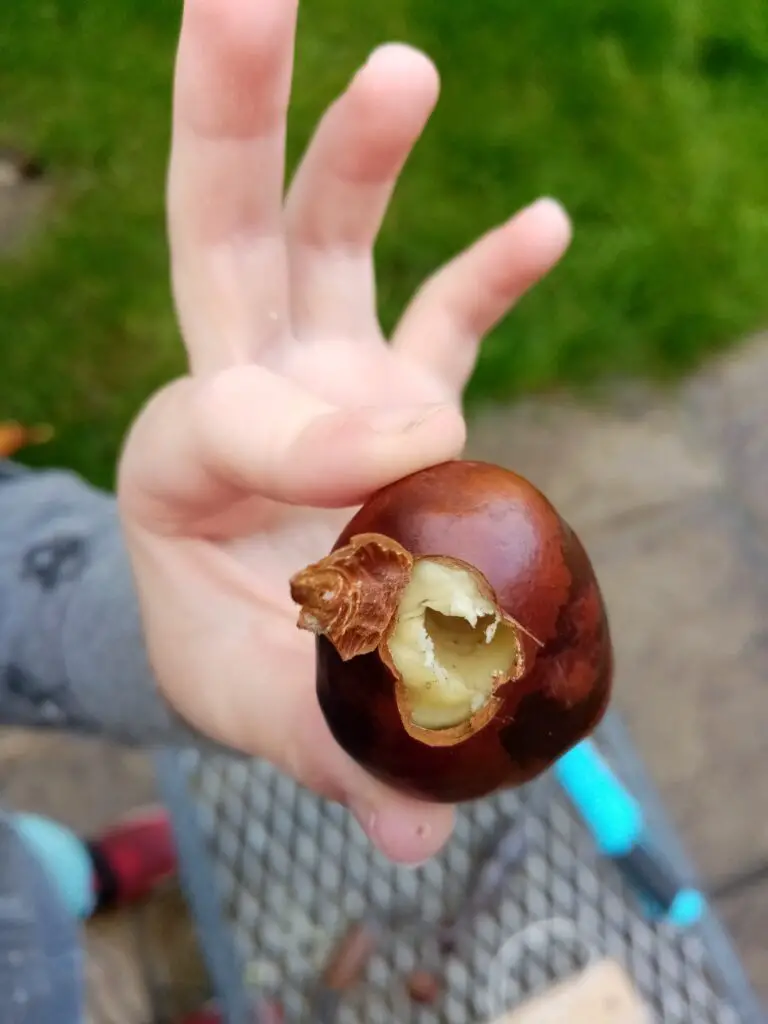
Crush a small piece of conker shell (not the seed itself) in a jar of water and shake it — the mild foam that appears is the saponins doing exactly what they’d do in soap. It’s a simple, safe way to make the “soap-like compound” idea concrete rather than abstract, and it always helps (adults and children) to see it happening than just to listen to your explanation.
The tree behind the seed
The horse chestnut, Aesculus hippocastanum, isn’t actually native to Britain. It arrived from the Balkan peninsula in the late 16th century and was widely planted as an ornamental tree, which is why it’s such a familiar sight in parks, avenues and school grounds rather than deep woodland.
A single mature tree can produce hundreds of conkers in a good year, though yield varies considerably. A late frost during flowering, or a dry summer, can noticeably thin a tree’s autumn crop.
Horse chestnuts have also faced real pressure in recent decades from leaf miner moths and bleeding canker disease, both of which can leave trees looking scorched and brown well before a normal autumn colour change, so if your group asks why a particular tree looks unwell, that could be your answer.
Turning the science into a session
Here’s a simple outline for a group session on the topic of conkers:
- Collect a mix of freshly opened and older, dulled conkers to compare side by side. Only pick up what has already fallen! Don’t pick direct from the tree.
- Let the group handle both and describe the difference before offering the explanation.
- Buff a dulled conker with a cloth as a demonstration, and ask the group to predict what will happen first.
- Finish with the saponin foam experiment as a hands-on close, ideally outdoors given the mess factor. If you have enough equipment, they can all do this themselves, which is more fun than watching you demo.
We have lots of autumn forest school activities if you want more ideas!

About the author: Jon Borley
Jon qualified as a Level 3 Forest School Leader with the Sussex Wildlife Trust. He has worked independently as a practitioner running forest school clubs and also within schools both in a forest school capacity and as an outdoor learning teaching assistant, working with preschoolers to secondary-aged children. He has previously led sessions for adults as part of professional development events for the Sussex FSA, and is a member of MIAS.