
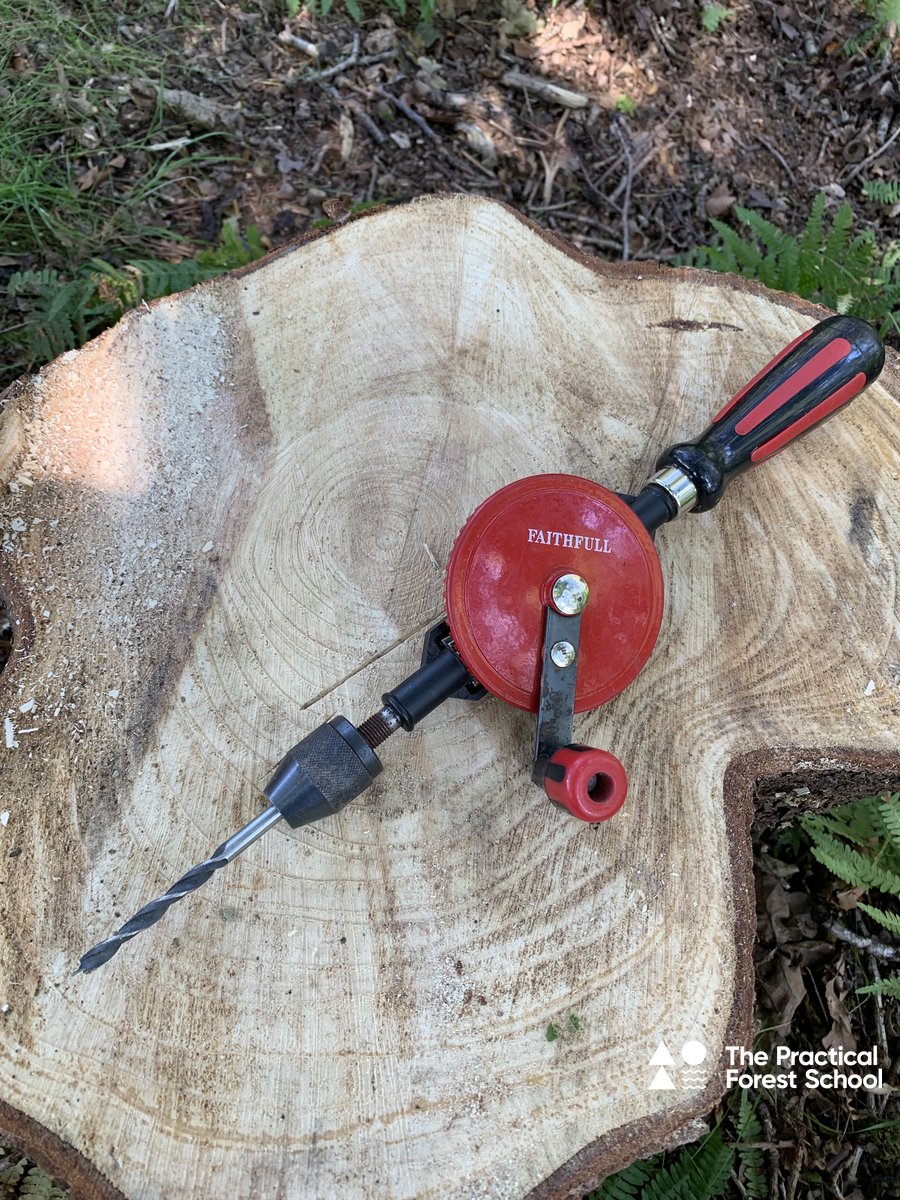
Forest School Equipment: What’s Actually in Our Kit Bag
People imagine forest school equipment falls into two camps: either nothing at all, just sticks and mud, or a huge specialist kit list you need to buy before you can start. Neither is quite right!
Here’s what’s in our kit bag, split by who it’s for and why.
What the children use
Most of what children handle at forest school is simple, and often it’s just the woodland itself. But a few actual tools do get used, always under close supervision.
- Potato peelers, for whittling, which are safer than knives but still teach real bladework
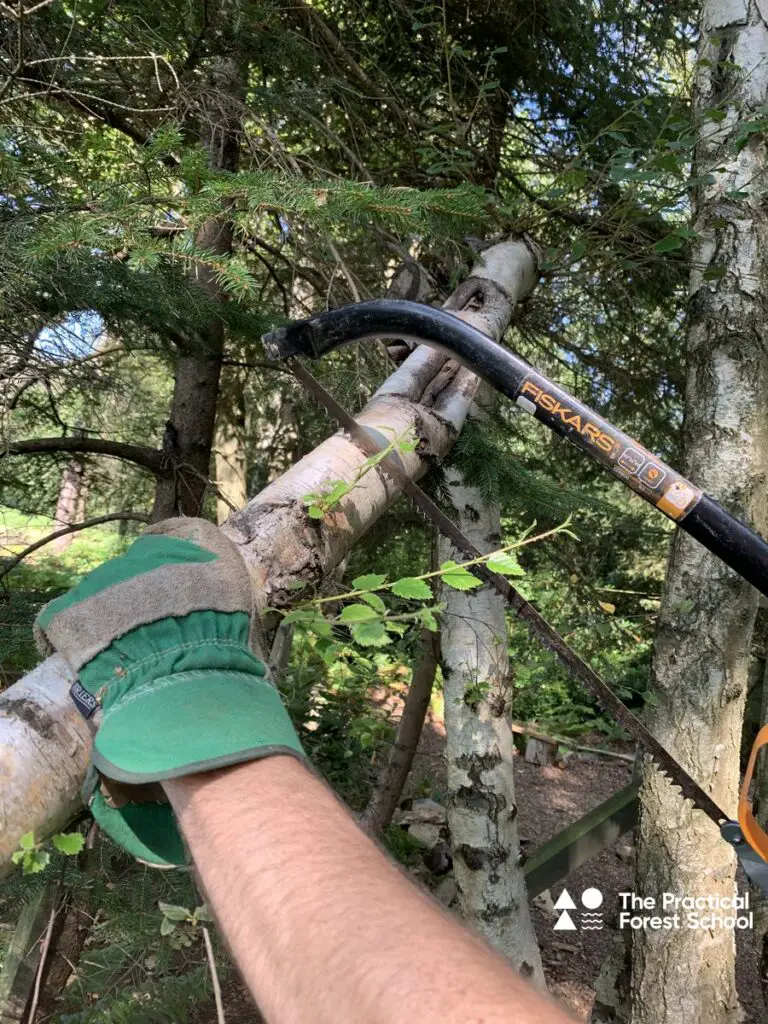
- Bow saws, for older or more experienced children, always one-to-one with an adult
- Hand trowels and small digging tools, for den building and mini beast hunting
- Magnifying glasses and bug pots, for closer looks at whatever’s been found
- Rope, for basic knots and shelter building, including offcuts children can practise on freely
- Mallets and pegs, for securing tarps and den frameworks
We deliberately don’t hand out anything a child can’t be shown how to use safely first. Every tool session starts with how to hold it, how to pass it, and what “stop” means if a leader calls it.
How tool use progresses over time
New children don’t start with a bow saw on day one, obviously!
We would recommend introducing tools in a rough order: rope and knots first, since there’s no blade involved at all, then potato peelers for whittling once a child can follow basic instructions consistently, then bladed knives and bow saws for children who’ve shown they can handle the responsibility.
It’s less a fixed age cutoff and more a judgement about a particular child’s ability to listen and follow safety rules, which is one of the reasons small, consistent groups work better than large rotating ones. Leaders get to know each child’s readiness properly.
What leaders carry
This is the less photogenic half of the kit bag, but it’s the half that makes the risk in “supported risk” actually supported.
- A comprehensive first aid kit, checked and restocked regularly
- A mobile phone with full signal checked in advance, for emergencies
- Fire lighting equipment and a fire blanket, used only by a Level 3 qualified leader, and only if we are going to be having fire – some setting won’t allow fire or it’s not appropriate (e.g. a very hot day)
- Site-specific risk assessment paperwork, reviewed before every session
- Spare layers, particularly gloves and socks, because someone always gets wet
- A whistle or agreed signal for calling the group together quickly
This is the baseline, you can always add to it later.
Clothing, which matters more than people expect
If we had to pick the single most useful thing a parent can get right, it’s not a toy or a tool. It’s clothing.
- Waterproof trousers and jacket, genuinely waterproof rather than just showerproof
- Wellies or sturdy waterproof boots, broken in rather than brand new
- Warm layers underneath, because “waterproof” doesn’t mean “warm”
- A full spare set left with us, because mud happens!
- A sun hat and sunscreen in summer, since shade in woodland is patchy at best
Cotton is the enemy here. It holds water and gets cold. Wool or synthetic base layers do far better in wet British woodland.
What changes across the seasons
What we carry and what families are asked to provide shifts noticeably through the year.
In winter, extra spare gloves and socks, hand warmers, and a flask for hot squash become standard. In summer, sun protection and extra water take priority, and we watch hydration much more closely than in colder months. Autumn brings out the wet-weather layers in earnest, and spring is unpredictable enough that we tend to pack for both extremes at once.
What we don’t use
Just as telling as what’s in the kit bag is what we’ve deliberately left out.
We don’t recommend using plastic toys or manufactured play equipment. Part of the point of forest school is that the woodland provides the resources, sticks, mud, leaves, water, rather than importing plastic versions of play from indoors.
Having said that, some schools have kit they want you to use, or you can only get plastic magnifying glasses, so make your own judgement.
If you’re setting up your own kit
For anyone starting a forest school group, whether professionally or informally with a home-ed group or Scout unit, our advice is to build the safety kit first and the activity kit second. First aid, communication, and risk assessment paperwork aren’t the exciting part, but they’re what actually makes everything else possible.
Buy the children’s tools gradually as your group’s confidence grows, rather than kitting out for every possible activity on day one. You’ll learn what your particular group actually uses, and a shed full of unused equipment helps nobody.
A rough starting order that’s worked for us:
- First aid kit and communication plan
- Basic rope and simple digging tools
- Potato peelers once the group is settled
- Bow saws and knives, only once individual readiness is clear
- Fire lighting equipment, once a Level 3 leader is in place to run it
Budget-friendly ways to build a kit
Kitting out a forest school group doesn’t have to mean buying everything new and specialist from a forest school supplier, though those suppliers do make good, purpose-built kit.
A few ways we’ve kept costs down over the years:
- Charity shops and car boot sales for spare wellies and waterproofs, particularly in children’s sizes that get outgrown quickly anyway
- We’ve sourced hand tools at car boot sales!
- Asking families to donate outgrown waterproofs and boots to a shared spares box, which also solves the “someone forgot their kit” problem
- Repairing tarps and ropes rather than replacing them at the first sign of wear.
The one area we don’t economise on is safety kit, first aid supplies, communication equipment, and anything fire-related. That’s always bought new, checked regularly, and replaced the moment it’s due.
Equipment questions we get asked most
Do you need a chainsaw? No! Any larger deadwood clearance or coppicing on forest school sites is done separately, outside session time, by someone holding the specific chainsaw qualifications required. It’s never a tool used with, or anywhere near, a session in progress.
What if my child doesn’t have full waterproofs yet? Let your provider know. We keep a small spares box for exactly this situation, and most well-run settings do the same, so a missing waterproof shouldn’t be a reason to miss a session.
Do children need to bring their own tools? No, reputable providers supply and maintain all tools used during sessions themselves, partly for safety and partly because tool quality and condition matters for how safely they can be used.

About the author: Jon Borley
Jon qualified as a Level 3 Forest School Leader with the Sussex Wildlife Trust. He has worked independently as a practitioner running forest school clubs and also within schools both in a forest school capacity and as an outdoor learning teaching assistant, working with preschoolers to secondary-aged children. He has previously led sessions for adults as part of professional development events for the Sussex FSA, and is a member of MIAS.